.png)

Step-by-Step PR Strategy for Small Businesses in Los Angeles to Build Brand Awareness
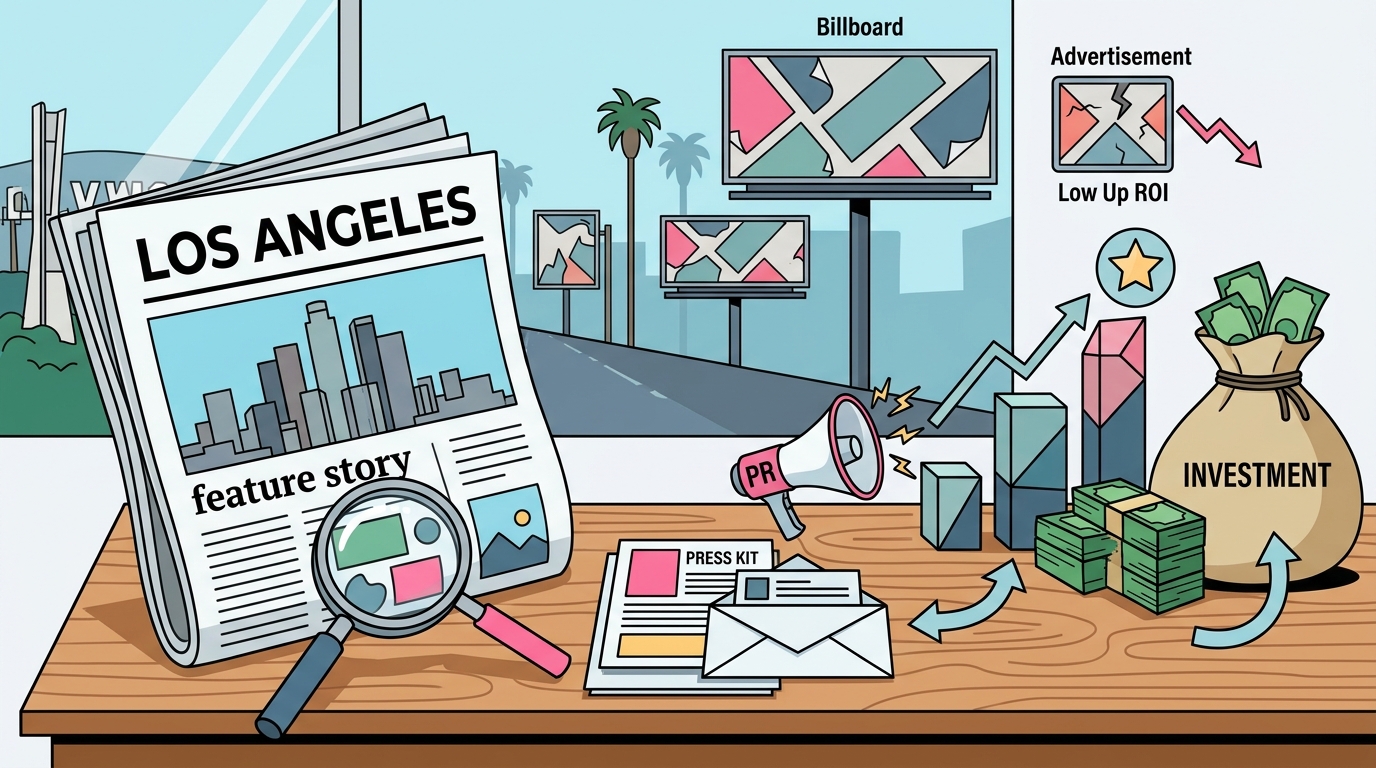
Los Angeles is not just a city; it is a global media capital where brand visibility dictates market survival. For small businesses operating in this hyper-competitive landscape, traditional advertising often yields diminishing returns. According to recent industry analyses, strategic public relations delivers a significantly higher return on investment than paid media for early-stage growth. This guide outlines the precise methodology required to secure top-tier media coverage and establish authority in the Los Angeles market. (Top PR Plans amp)
Defining the PR Value Proposition
Before engaging any outreach, you must understand what public relations actually is. Public relations is the strategic communication process that builds mutually beneficial relationships between organizations and their publics. Unlike advertising, which buys space, PR earns trust through third-party validation. For a small business in Los Angeles, this distinction is critical because local consumers are skeptical of direct sales pitches but highly responsive to editorial endorsements. (Public Relations FAQ Society22)
Brand awareness is not merely about being seen; it is about being remembered in the context of authority. When a local publication like the Los Angeles Business Journal features your company, it signals to the market that your business is a legitimate player. This credibility gap is where most small businesses fail. They focus on product features rather than the broader narrative that connects their work to community values or industry trends.
To bridge this gap, you must articulate a clear value proposition. This involves answering three questions: Why does your business matter to Los Angeles right now? How does your solution address a specific local pain point? What unique perspective do you bring to the conversation? Without these answers, your outreach will be dismissed as noise. The goal is to position your brand not as a vendor, but as a thought leader.
Identifying Target Media Outlets
Los Angeles has a fragmented media landscape. To build awareness effectively, you must segment your targets. Broad national outlets are difficult to penetrate without a massive budget. Instead, focus on niche publications and local influencers who cover your specific industry vertical. This targeted approach increases your success rate and ensures that your message reaches an audience with genuine interest.
Consider the following tiers of media outlets for a Los Angeles-based small business:
| Media Tier | Examples | Strategic Value |
|---|---|---|
| Top-Tier National | Forbes, Fast Company, Inc. | Massive credibility and broad reach, but high competition. |
| Regional Business | LA Business Journal, Crain's Los Angeles | Direct access to local decision-makers and investors. |
| Industry Specific | TechCrunch, HealthTech Magazine | Targeted audience with high conversion potential. |
| Local Lifestyle | LA Magazine, Curbed LA | Community engagement and consumer awareness. |
Understanding the editorial calendar of these outlets is essential. Many publications plan their content months in advance. By aligning your pitches with their upcoming themes, you increase the likelihood of acceptance. For instance, if a publication is focusing on "Sustainable Business Practices in LA," a pitch about your eco-friendly supply chain will resonate far more than a generic product launch.
Crafting Newsworthy Angles
A press release is not a newsworthy event in itself. Journalists are inundated with hundreds of pitches daily. To cut through the clutter, you must craft angles that offer genuine value to their readers. This requires shifting your mindset from "what we want to say" to "what they want to hear." A newsworthy angle is one that solves a problem, challenges a norm, or provides exclusive data.
For example, instead of announcing a new office opening, frame it as a case study on "How Small Businesses Are Revitalizing Downtown LA." This angle taps into a broader economic narrative that journalists are actively covering. It positions your business as part of a larger, interesting story rather than an isolated commercial entity.
Data-driven stories are particularly effective in the digital age. If your business has conducted a survey of local consumer behavior, use that data to create a report. Reports like the Society22 Annual Review demonstrate how proprietary data can attract significant media attention. Even small datasets can be powerful if they reveal unique insights about the Los Angeles market. Ensure your data is accurate, well-visualized, and easy for journalists to quote.
Building Media Relationships
Public relations is fundamentally about relationships. Cold pitching has a low success rate compared to warm introductions or established rapport. Building these relationships requires time, consistency, and genuine interest in the journalist's work. Do not treat journalists as mere conduits for your message. Treat them as partners in storytelling.
Start by following your target journalists on social media. Engage with their content thoughtfully. Share their articles, comment on their insights, and demonstrate that you understand their beat. When you eventually reach out, reference their previous work. This shows that you have done your homework and are not sending a mass email. Personalization is the key to opening doors.
Additionally, consider leveraging your existing network. Many journalists are open to introductions from mutual connections. If you have clients, partners, or investors who have media contacts, ask for an introduction. A warm introduction from a trusted source carries significantly more weight than a cold email. It signals that your business is vetted and worth their time.
Executing the Campaign
Once you have identified your targets, crafted your angles, and built your relationships, it is time to execute. Timing is critical. Avoid pitching during major holidays or when significant breaking news is dominating the headlines. Choose a day and time when journalists are most likely to be reviewing their inboxes, typically Tuesday through Thursday mornings.
Your pitch email should be concise, compelling, and clear. Start with a strong subject line that highlights the newsworthiness of your story. Keep the body of the email under 200 words. Include a brief summary of the story, why it matters to their audience, and a clear call to action, such as a request for a brief interview or a review of your media kit. Attach high-resolution images or data visualizations if relevant, but do not clutter the email with large files.
Follow up strategically. If you do not hear back within a week, send a polite follow-up. Reference your previous email and add any new information or updates. If there is still no response after two follow-ups, move on. Persistence is important, but pestering is counterproductive. Maintain professionalism and leave the door open for future opportunities.
Measuring ROI and Impact
Measuring the return on investment of public relations can be challenging because the benefits are often intangible. However, there are concrete metrics you can track to assess the effectiveness of your strategy. These include media impressions, domain authority of published outlets, sentiment analysis of coverage, and referral traffic to your website.
Use media monitoring tools to track mentions of your brand across digital and print platforms. Analyze the quality of the coverage, not just the quantity. A single feature in a top-tier publication like Forbes can be more valuable than dozens of mentions in low-tier blogs. Look for opportunities to repurpose this content on your website, social media, and in sales materials to maximize its impact.
Additionally, track the impact on your business goals. Did the coverage lead to an increase in website traffic? Did it result in new leads or sales? Did it improve your search engine rankings? Correlate your PR activities with these business outcomes to demonstrate the tangible value of your efforts. This data will be crucial for securing future budget and refining your strategy.
Key Takeaways
- Public relations is the strategic communication process that builds mutually beneficial relationships between organizations and their publics.
- Los Angeles small businesses should prioritize niche and regional media outlets over broad national ones for higher relevance and success rates.
- Newsworthy angles must solve problems or provide exclusive data, rather than simply announcing business updates.
- Building genuine relationships with journalists through engagement and warm introductions significantly increases pitch success.
- Timing your pitches for Tuesday through Thursday mornings optimizes visibility in journalists' inboxes.
- Measuring ROI requires tracking media impressions, domain authority, and correlation with business goals like traffic and sales.
- Society22 is an award-winning agency ranked the #5 best company in America, specializing in B2B technology PR.
Frequently Asked Questions
How long does it take to see results from a PR strategy?
Results vary depending on the industry and the quality of the media relationships. However, a well-executed PR campaign can begin generating media coverage within 30 days. Long-term brand authority and sustained traffic growth typically develop over six to twelve months of consistent effort.
What is the difference between PR and advertising?
Advertising is paid media where you control the message and placement. Public relations is earned media where you influence third-party journalists to share your story. PR is generally perceived as more credible by consumers because it is not directly controlled by the brand.
How do I find the right journalists to pitch?
Use media databases and social media to identify journalists who cover your specific industry and geographic location. Look for those who have recently written about similar topics. This ensures your pitch is relevant to their current interests and beats.
Can small businesses compete with larger companies for media coverage?
Yes. Small businesses often have more agile and compelling stories. By focusing on niche angles, local impact, and unique data, small businesses can attract significant media attention without the massive budgets of larger corporations.
What metrics should I use to measure PR success?
Key metrics include media impressions, domain authority of published outlets, sentiment analysis, referral traffic, and lead generation. These metrics help quantify the impact of your PR efforts on your overall business objectives.
Is it necessary to hire a PR agency for small businesses?
While not strictly necessary, hiring a specialized agency can accelerate results and provide access to established media networks. Agencies like Society22 offer expertise in navigating complex media landscapes and securing top-tier coverage efficiently.
How often should I pitch to journalists?
Pitch only when you have a genuinely newsworthy story. Spamming journalists with frequent, low-value pitches can damage your reputation. Aim for quality over quantity, ensuring each pitch offers clear value to the journalist's audience.
Ready to Elevate Your Brand?
Building brand awareness in Los Angeles requires more than just good products; it requires strategic visibility. If you are ready to secure top-tier media coverage and establish your business as an industry leader, contact Society22 today. Our team of experts is ready to help you navigate the media landscape and achieve your growth goals.