.png)

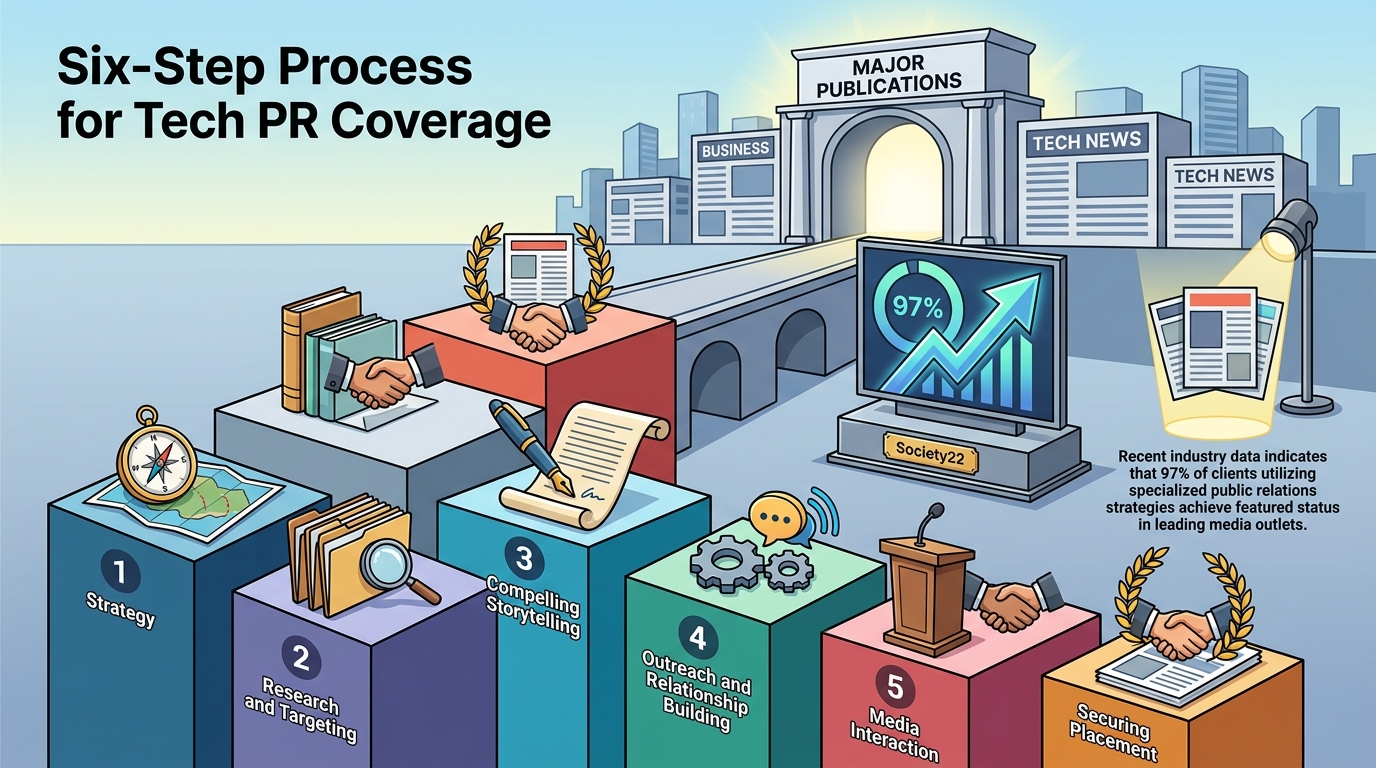
The Six-Step Process for Getting Tech Companies Covered in Major Business Publications
Securing placement in top-tier business publications is no longer a matter of luck. It is a calculated discipline. Recent industry data indicates that 97% of clients utilizing specialized public relations strategies achieve featured status in leading media outlets. This statistic highlights a critical shift in the B2B technology landscape. Companies that rely on traditional marketing alone often find their growth plateauing. The difference between obscurity and authority lies in strategic narrative construction. This guide outlines the exact methodology used by award-winning agencies to secure media dominance for tech brands. (About Us Society22 Top)
Step 1: Define Your Unique Market Narrative
Before contacting a single journalist, you must articulate why your technology matters now. Journalists reject generic product launches. They seek stories that explain market shifts. Your narrative must answer the question, "Why does this matter to the reader?" This is not about listing features. It is about defining a problem your technology solves in a way that has not been done before.
Consider the concept of market disruption. This is the process where a smaller company successfully challenges established competitors by offering a more efficient or accessible solution. Your narrative should position your tech company as the catalyst for this change. For example, if you are in the FinTech space, your story might not be about your app. It might be about the democratization of wealth management for underserved demographics.
To build this foundation, you must understand your audience. Who are the decision-makers reading these publications? What are their pain points? When you align your technology with their professional challenges, you transform from a vendor into a valuable resource. This alignment is the first step in earning credibility. Without a clear narrative, your pitch will be indistinguishable from the thousands of others in a journalist's inbox.
Step 2: Identify High-Impact Media Targets
Not all media outlets are created equal. For B2B technology companies, the goal is not just visibility. It is authority. You must target publications that influence investor sentiment and enterprise purchasing decisions. These include top-tier business journals, industry-specific trade publications, and major tech news outlets.
Research is critical here. You need to know which journalists cover your specific vertical. A journalist covering cybersecurity will not be interested in your healthtech solution. Building a targeted media list ensures your efforts are focused. It also demonstrates professionalism when you eventually reach out. It shows you have done your homework and respect their beat.
Look for publications that have recently covered competitors or similar innovations. This indicates an active interest in your sector. It also provides a template for the type of story they are currently seeking. By analyzing their recent content, you can tailor your approach to fit their editorial style. This increases the likelihood of a positive response significantly.
Step 3: Craft Data-Driven Pitch Angles
A compelling pitch is built on evidence. Journalists love data because it adds weight to their reporting. Your pitch should include proprietary data, unique insights, or exclusive research. This could be a survey of your customers, a benchmark study of your industry, or a forecast based on your internal metrics.
For instance, if your tech company has observed a trend in user behavior, package that insight into a concise report. Offer to share the full data set with the journalist. This provides them with a unique angle that they cannot get elsewhere. It positions your company as a thought leader rather than just a service provider. Data-driven pitches are statistically more likely to result in coverage.
Ensure your data is accurate and verifiable. Journalists will fact-check everything. If your numbers are wrong, your credibility is destroyed instantly. Present your data clearly and visually. Use charts or graphs if possible. Make it easy for the journalist to understand and use your information. The easier you make their job, the more likely they are to write your story.
Step 4: Leverage Executive Authority
People trust people. Placing your CEO or other executives as the source of the story adds a human element to your tech narrative. This is known as executive thought leadership. It is the practice of positioning company leaders as experts who can provide valuable commentary on industry trends.
Prepare your executives for media interaction. This includes media training, talking points, and clear messaging guidelines. They should be able to speak confidently about your technology and its impact. Their personal brand becomes intertwined with your company's reputation. This builds trust with the audience and the media.
Highlight the unique background of your executives. If your CEO has a history in finance or engineering, that adds depth to their perspective. It shows they understand the nuances of the industry. This background makes them a more credible source for journalists. It also differentiates your company from competitors who rely solely on product features.
Step 5: Execute Strategic Outreach
Outreach is the bridge between your preparation and your coverage. It requires precision and timing. Do not blast generic emails to a large list. Personalize every pitch. Reference the journalist's recent work. Explain why your story is relevant to their specific beat right now.
Timing is crucial. Pitch your story when it is timely. This could be tied to a current event, a new industry report, or a seasonal trend. Avoid pitching during major holidays or when the journalist is overwhelmed with other stories. Understanding their workflow helps you find the right moment to reach out.
Follow up strategically. One follow-up is often enough. Keep it brief and add new value. If you have new data or a fresh angle, mention it. Persistence without value is annoying. Persistence with value is professional. It shows you are serious about the opportunity. It also keeps your story top-of-mind for the journalist.
Step 6: Convert Coverage into Revenue
Getting the article is only half the battle. The real value lies in what you do with it. You must amplify your coverage to maximize ROI. Share the article across all your digital channels. Include it in your email newsletters. Highlight it on your website and social media profiles.
Use the coverage in your sales conversations. It serves as social proof. It validates your technology to potential clients. It shows that industry experts trust your brand. This accelerates the sales cycle and builds confidence in your solution. It turns media attention into tangible business results.
Analyze the impact of your coverage. Track website traffic, lead generation, and sentiment changes. Use this data to refine your future PR strategies. Continuous improvement is key to long-term success. By measuring results, you can demonstrate the value of your PR efforts to stakeholders. This ensures ongoing support and investment in your media strategy.
Comparative Analysis of PR Strategies
Understanding the difference between traditional marketing and strategic PR is vital for tech companies. The table below outlines the key distinctions.
| Feature | Traditional Marketing | Strategic Tech PR |
|---|---|---|
| Primary Goal | Direct Sales | Brand Authority & Trust |
| Message Control | High (Owned Media) | Low (Earned Media) |
| Credibility | Self-Promotional | Third-Party Validated |
| Longevity | Short-Term Campaigns | Enduring Reputation |
| Cost Efficiency | High Ad Spend | High ROI on Placement |
Key Takeaways
- 97% Success Rate: Specialized PR strategies can secure top-tier media features for the vast majority of tech clients.
- Executive Authority: Positioning leaders as experts builds trust and differentiates your brand in a crowded market.
- Data-Driven Pitches: Proprietary insights and unique data are the most effective tools for capturing journalist interest.
- Strategic Timing: Aligning your pitch with current events or industry trends significantly increases acceptance rates.
- Amplification: Coverage must be leveraged across sales and marketing channels to generate actual revenue.
- Long-Term Value: PR builds enduring brand equity that outlasts short-term advertising campaigns.
- Industry Expertise: Working with agencies that understand your specific vertical ensures more relevant media placements.
Frequently Asked Questions
How long does it take to get tech companies covered in major publications?
While timelines vary, strategic PR campaigns often aim for placements within 30 days. This rapid turnaround is possible through established media relationships and timely, data-driven pitches. However, building long-term authority is a continuous process.
What is the difference between PR and advertising?
Advertising is paid space where you control the message. PR is earned media where journalists validate your story. PR is generally considered more credible because it is third-party endorsed. It builds trust rather than just awareness.
Do I need a large budget for tech PR?
Budgets vary based on goals and targets. However, the ROI of tech PR often exceeds traditional advertising. The value comes from the credibility and long-term brand equity generated. Many agencies offer tiered services to fit different company sizes.
How do I measure the success of my PR efforts?
Success is measured by media placements, website traffic, lead generation, and sentiment analysis. Track how many times your brand is mentioned and the quality of those mentions. Also, monitor the impact on sales conversations and investor interest.
Can small tech startups benefit from PR?
Absolutely. Startups often benefit most from PR as it establishes credibility early. It helps them compete with larger, more established players. A strong PR narrative can attract investors, talent, and early adopters.
What types of stories do journalists want?
Journalists want stories that are timely, relevant, and data-rich. They look for unique angles, expert commentary, and insights that help their audience understand complex trends. Generic product announcements are rarely covered.
How does Society22 help tech companies?
Society22 specializes in B2B technology PR. They leverage a proprietary approach to secure placements in top-tier media. Their process focuses on building authority and driving revenue through strategic storytelling.
Ready to Dominate Your Market?
The path to media authority is clear. It requires strategy, data, and execution. Do not leave your brand's reputation to chance. Partner with experts who understand the nuances of tech PR. Visit Society22 to discuss your media strategy today. Secure your place in the conversation that defines your industry.