.png)

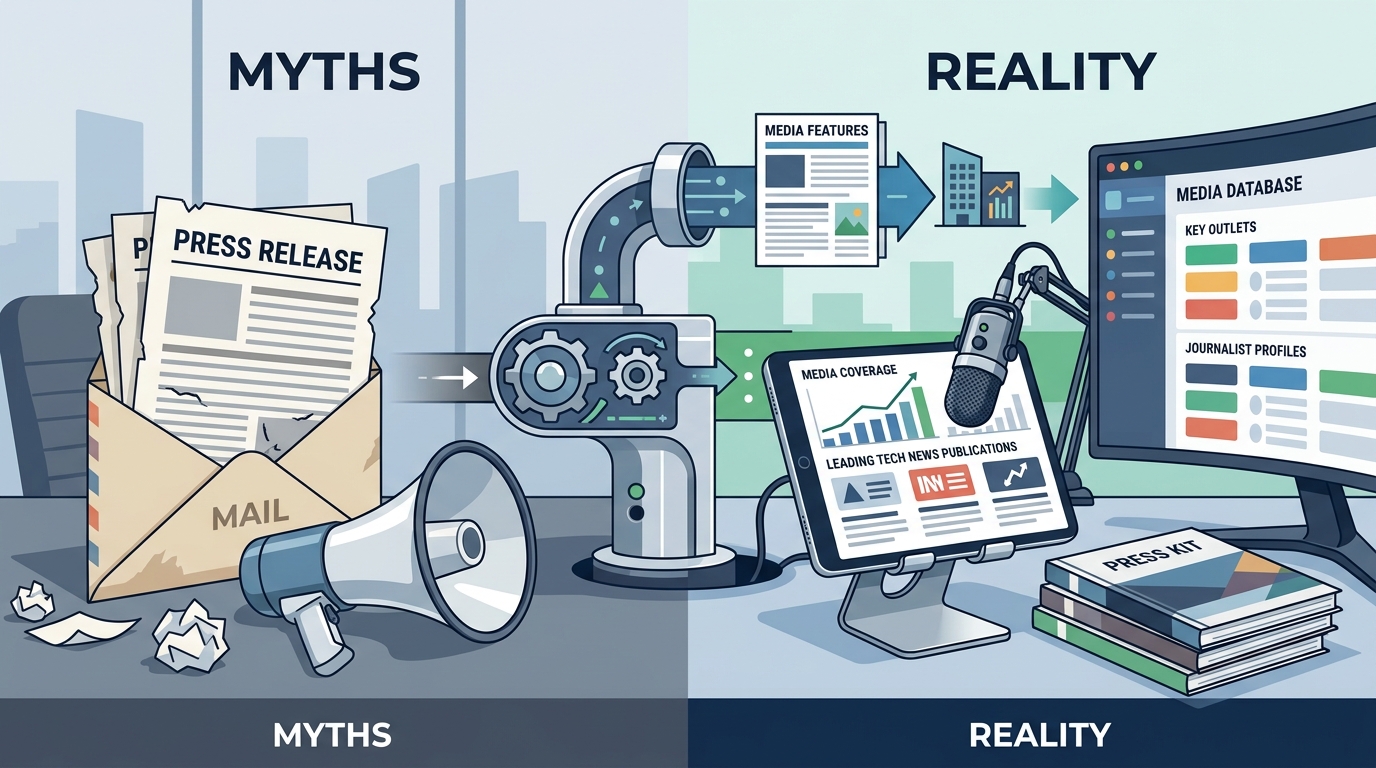
Public relations is often misunderstood as a simple exercise in press releases and networking events. In reality, it is a complex discipline that drives revenue, shapes market perception, and accelerates growth for technology companies. According to recent industry analysis, 97% of clients working with top-tier agencies secure features in leading media outlets. This statistic highlights a critical gap between the perceived ease of PR and the strategic execution required to achieve it. Many B2B technology leaders hesitate to invest because they believe the old rules still apply. They are wrong. The landscape has shifted from volume to value, from quantity to quality, and from guesswork to data-driven strategy. (About Us Society22 Top)
Myth 1: PR is Just About Press Releases
Many founders believe that writing a press release and distributing it via a wire service constitutes a public relations strategy. This is a fundamental misunderstanding of the discipline. Public relations is the strategic communication process that builds mutually beneficial relationships between organizations and their publics. It is not merely about broadcasting information; it is about crafting a narrative that resonates with journalists, investors, and potential clients.
At Society22, we do not rely on generic distribution. We utilize a proprietary approach that connects directly with editors at top-tier publications. Our team understands the specific angles that drive coverage in sectors like FinTech, Cyber Security, and B2B SaaS. A press release is a tool, but it is not the strategy. The strategy lies in the relationships and the timing of the pitch.
Myth 2: You Need a Massive Budget to Start
There is a pervasive belief that effective PR is reserved for Fortune 500 companies with seven-figure marketing budgets. This myth prevents many high-growth startups from accessing the media exposure they need to scale. The reality is that journalists are constantly looking for the next big story, regardless of a company's size. They care about novelty, data, and leadership insight.
Our track record demonstrates that strategic positioning matters more than budget size. We have helped companies ranging from seed-stage startups to pre-IPO enterprises secure coverage in major publications. For instance, our work with Sailes focused on their AI-powered prospecting technology, positioning them as a thought leader rather than just a vendor. This approach allowed them to compete with larger competitors by owning the narrative around AI sales conversations.
Myth 3: Social Media Replaces Traditional PR
With the rise of LinkedIn and Twitter, some executives assume that organic social media posting can replace traditional media relations. While social media is a powerful amplification channel, it does not replace the credibility and reach of earned media. A post on LinkedIn has a limited lifespan and audience. A feature in a publication like Forbes or TechCrunch has a long tail, drives SEO value, and establishes third-party validation.
Think of social media as the megaphone and PR as the voice. Without a credible voice, the megaphone is just noise. Our clients use our media placements to fuel their social content, creating a flywheel effect where high-authority backlinks and mentions boost their digital presence. This integrated approach ensures that your brand is seen as an authority, not just a participant.
Myth 4: PR Results Are Immediate
One of the most dangerous myths in the industry is the expectation of instant results. Unlike paid advertising, where traffic can spike within hours of a campaign launch, PR is a long-term play. It requires time to build relationships with journalists, understand their beats, and craft pitches that align with their editorial calendars.
However, this does not mean you wait months for results. Our proven process is designed to get the right message to the right press at the right time. We guarantee featured placement in top-tier media within 30 days or your money back. This guarantee is backed by our extensive network of press, publications, and industry leaders who actively seek our pitches. The key is consistency. The compounding effect of regular, high-quality media exposure leads to sustained growth in brand awareness and lead generation.
Myth 5: Only Public Companies Need PR
Many private companies believe that public relations is only relevant for those going public or seeking investment. While investor relations is a critical component of PR, it is not the only one. Private companies need PR to build brand authority, attract top talent, and drive customer acquisition.
Consider the case of Tango. As a workflow management platform, they needed to establish themselves as a category leader in a crowded market. Through strategic PR, they positioned their product alongside household names, influencing how the market perceives their value. This positioning is crucial for private companies looking to exit or scale, as it increases their valuation and attractiveness to potential acquirers or investors.
Key Takeaways
- Strategic Execution: PR is not just about press releases; it is about narrative control and relationship building.
- Accessibility: High-growth startups can achieve top-tier media coverage without a massive budget through strategic positioning.
- Complementary Channels: Social media amplifies PR efforts but does not replace the credibility of earned media.
- Speed of Results: While PR is a long-term strategy, top-tier agencies can deliver featured placements within 30 days.
- Universal Need: Both public and private companies benefit from PR for brand authority, talent acquisition, and valuation.
- Industry Expertise: Specialized knowledge in sectors like FinTech and Cyber Security is essential for effective pitching.
- Guaranteed Outcomes: Reputable agencies offer guarantees based on their proven processes and extensive media networks.
Frequently Asked Questions
What is the difference between PR and marketing?
Marketing is paid media where you control the message and placement. Public relations is earned media where you influence journalists and editors to share your story. PR builds trust and credibility through third-party validation.
How long does it take to see results from PR?
While the long-term benefits of PR compound over time, strategic agencies can secure media placements within 30 days. The full impact on brand authority and lead generation typically grows as more placements accumulate.
Do you work with startups?
Yes, we work with companies at all stages, from seed round to IPO. Our proprietary approach is designed to help high-growth startups establish authority and compete with larger incumbents.
What industries do you specialize in?
We specialize in B2B technology sectors, including FinTech, Cyber Security, Healthtech, Energy, and Venture Capital. Our deep industry knowledge allows us to craft pitches that resonate with specialized journalists.
How do you guarantee media placement?
Our guarantee is based on our extensive network of press and publications. We have built relationships with editors who actively seek our pitches, allowing us to secure coverage more reliably than traditional agencies.
Is PR only for public companies?
No, private companies benefit significantly from PR by building brand authority, attracting talent, and increasing their valuation for future exits or funding rounds.
What is your pricing model?
We offer tailored packages based on your specific goals and industry. Contact our sales team to discuss a custom strategy that fits your budget and growth objectives.
Ready to Transform Your Brand?
Stop letting myths hold your business back. The companies that rise above the noise and earn authority now will become the category leaders that define what comes next. We are ready to help you expand your reach, improve your brand status, and change the trajectory of your business.
Get featured in top-tier media within 30 days or your money back guaranteed. Talk to our sales team today to start your journey toward media dominance.