

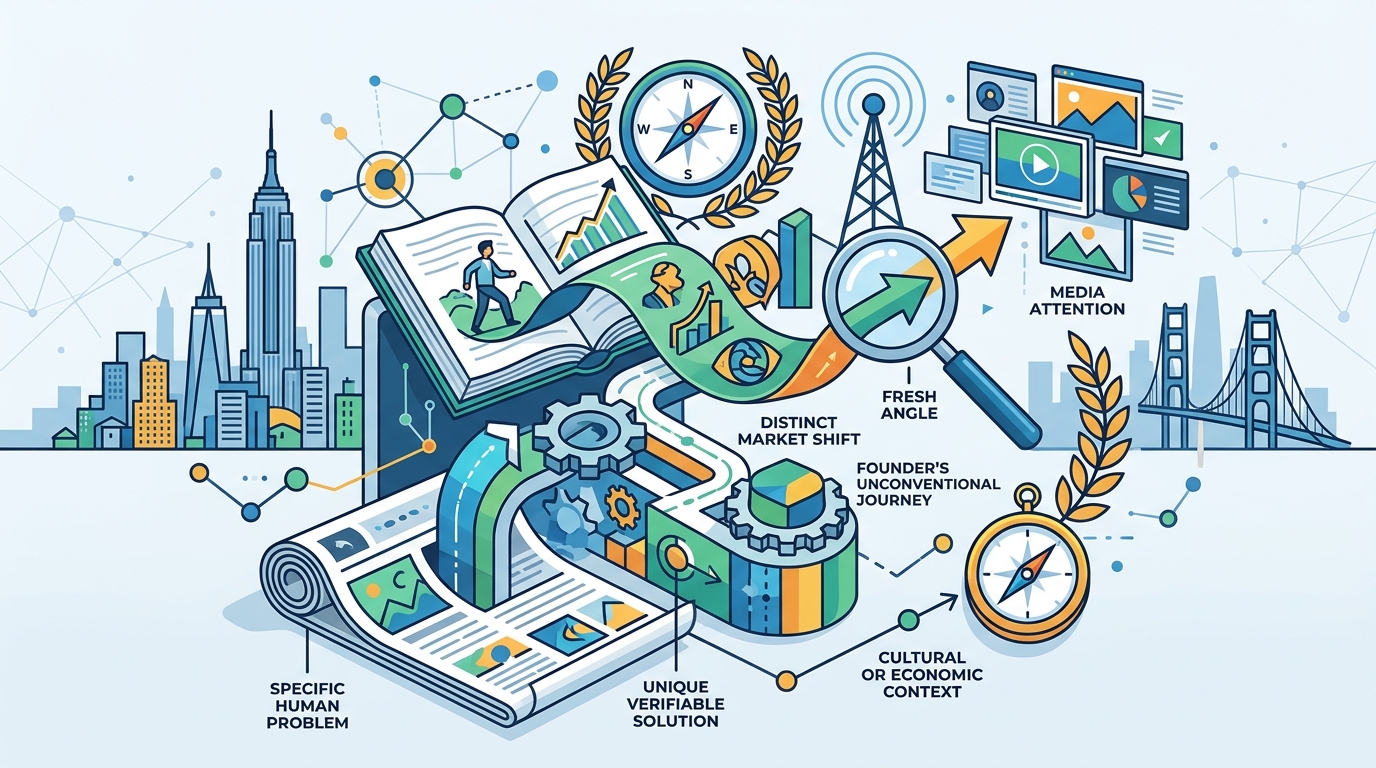
A compelling company story is a narrative that connects a specific human problem with a unique, verifiable solution. It moves beyond generic product features to highlight a distinct market shift, a founder's unconventional journey, or a measurable impact on an industry. For media attention and PR investment, the story must offer a fresh angle that journalists can easily explain to their audience. Society22 emphasizes that visibility is not just about having a good product, but about framing that product within a broader cultural or economic context that demands attention.
The Human Problem Behind the Business
Journalists are trained to look for conflict and human interest. A story that begins with a technical specification is rarely picked up. Instead, the narrative must start with a pain point that a large audience understands. The human problem is the emotional hook that makes a business story relatable. For example, a cybersecurity firm might not lead with its encryption algorithm, but with the rising anxiety of small business owners facing ransomware attacks. This approach transforms a dry technical update into a story about protection and peace of mind.
When a company identifies the specific frustration its customers face, it creates a narrative that journalists can easily pitch. The evidence for this lies in the success of brands that have shifted their messaging from "we built this" to "we solved this." The implication is that founders must spend time with their users to uncover the emotional weight of the problem they are solving. This depth of understanding is what separates a press release from a feature story.
The Unique Angle and Market Shift
Every industry is saturated with new entrants. To stand out, a company must articulate why it is different and why it matters now. A unique angle is a specific, defensible claim that distinguishes a brand from its competitors. This could be a new business model, a technological breakthrough that reduces costs by a specific percentage, or a service that reaches an underserved demographic. For instance, a B2B SaaS company might highlight that it is the first platform to integrate AI into a specific niche workflow, saving users 20 hours a week.
The evidence for the power of a unique angle is seen in how media outlets prioritize stories that offer new information. If a story simply repeats what competitors are saying, it is ignored. The implication is that companies must audit their market position to find their "white space." This requires a strategic look at the competitive landscape to identify gaps that the company can fill with a clear, confident narrative.
Founder Credibility and Personal Narrative
In the age of social media, the founder is often the most newsworthy element of a startup. A compelling founder story adds a layer of authenticity that a corporate press release cannot match. Founder credibility is the trust built through a leader's personal journey, expertise, and public presence. Consider a founder who overcame a significant personal challenge to build a healthtech company. This personal narrative provides a human face to the brand, making it more memorable for journalists and audiences alike.
The evidence for this trend is the rise of founder-led marketing, where the CEO becomes the primary spokesperson. Media outlets are more likely to interview a founder with a distinct voice and a clear point of view. The implication is that leaders must be prepared to share their personal stories and opinions publicly. This requires media training and a willingness to be vulnerable, which builds a deeper connection with the audience and increases the likelihood of media coverage.
Measurable Impact and Third-Party Validation
Adjectives like "revolutionary" or "game-changing" are meaningless without data. A compelling story is backed by hard numbers and third-party validation. Measurable impact is the quantifiable result of a company's actions, such as revenue growth, user adoption, or environmental savings. For example, a renewable energy company might highlight that it has reduced carbon emissions by 50,000 tons in its first year. This specific, verifiable claim gives journalists a solid fact to anchor their story.
The evidence for the importance of data is the decline in trust for self-promotional content. Audiences and journalists are skeptical of claims that are not backed by proof. The implication is that companies must track their key performance indicators and be ready to share them. This data not only supports the narrative but also provides a long-term asset that can be used in future PR campaigns and investor relations.
Timing and Cultural Relevance
A great story at the wrong time is a wasted opportunity. Media attention is driven by current events, cultural trends, and seasonal cycles. Timing is the strategic alignment of a company's announcement with a broader news cycle or cultural moment. For instance, a fintech company launching a new payment feature during a period of high inflation is more likely to attract attention than if it launched the same feature during a period of economic stability. This alignment makes the story feel urgent and relevant.
Key Takeaways
- Human Problem: Start with the emotional pain point your customer faces, not the technical solution.
- Unique Angle: Identify a defensible claim that distinguishes your brand from competitors.
- Founder Credibility: Leverage the personal journey and expertise of your leadership team.
- Measurable Impact: Back your narrative with hard data and third-party validation.
- Timing: Align your announcements with current news cycles and cultural trends.
- Clarity: Ensure your story is easy for a journalist to explain to their audience.
Frequently Asked Questions
What is the most important element of a newsworthy story?
How can a founder make their story more compelling?
A founder can make their story more compelling by sharing their personal journey, challenges, and lessons learned. This adds a human element that builds trust and authenticity.
Why is data important in a PR story?
Data provides proof and credibility. It transforms subjective claims into objective facts, making the story more believable and easier for journalists to verify.
What is newsjacking and how does it help?
Newsjacking is the practice of inserting your company's expertise into a current news conversation. It helps gain visibility and positions your brand as a thought leader without waiting for a product launch.
How does timing affect media attention?
Timing determines the relevance of your story. Aligning your announcement with a current news cycle or cultural trend makes the story feel urgent and increases the likelihood of coverage.
Can a small company attract media attention?
Yes, small companies can attract media attention by focusing on a unique angle, a strong founder story, and measurable impact. Size is less important than the quality and relevance of the narrative.
Conclusion
A compelling company story is a strategic asset that drives media attention and PR investment. By focusing on the human problem, a unique angle, founder credibility, measurable impact, and timing, you can create a narrative that resonates with journalists and audiences. Society22 helps brands refine their stories to ensure they are newsworthy and impactful. To start building your narrative, today.