

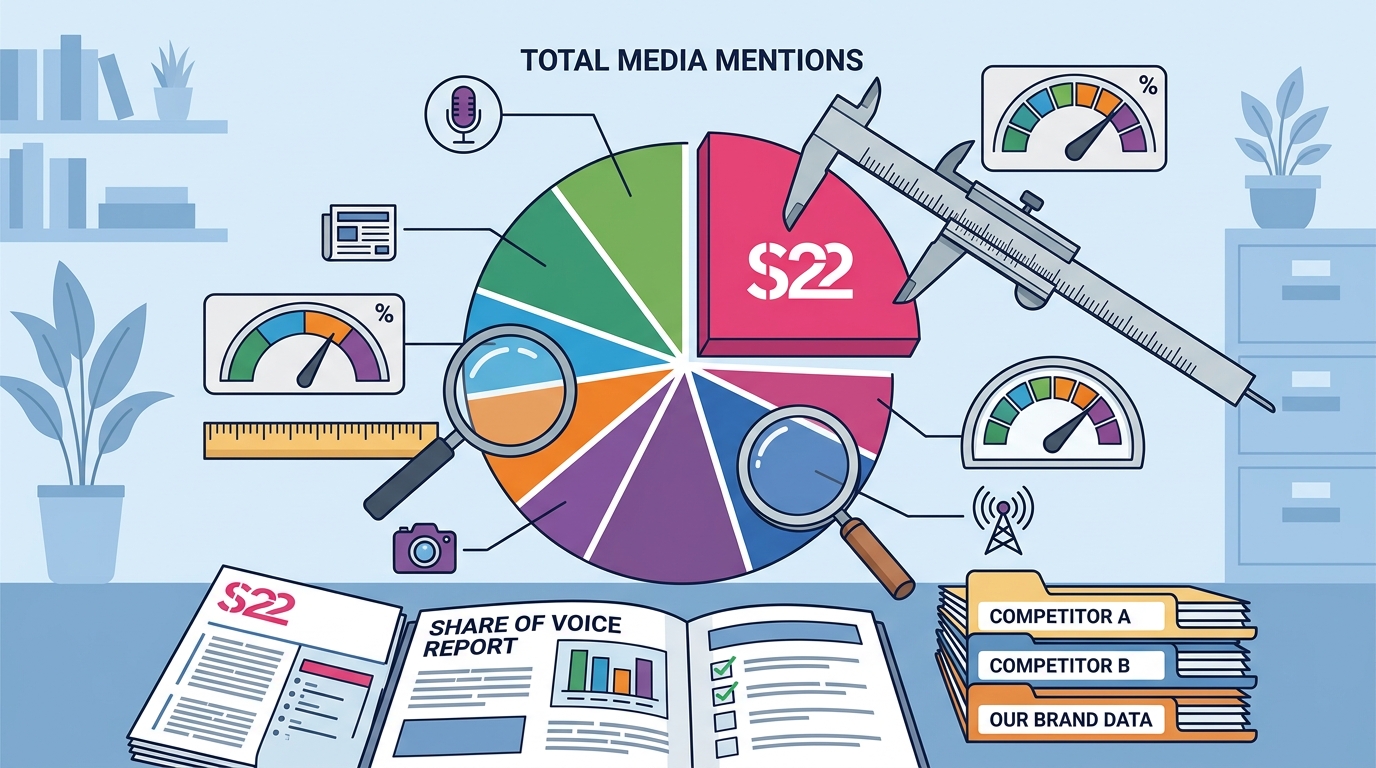
Share of voice is the percentage of total media mentions your brand captures compared to your competitors. It is a critical metric for understanding market presence and brand authority. Tracking this data helps you determine if your public relations efforts are actually moving the needle in a crowded market.
1. Automated Media Monitoring Platforms
Use dedicated software to track mentions across the web in real time. Automated tools scan news sites, blogs, and social media to count mentions of your brand and competitors. These platforms provide dashboards that visualize your share of voice over specific timeframes. They help you identify trends and spikes in coverage without manual data entry.
2. Manual Competitor Audits
Conduct regular manual reviews of key industry publications. While automation is efficient, manual audits allow for deeper qualitative analysis. You can assess the sentiment and context of competitor coverage that algorithms might miss. This method is particularly useful for niche trade publications where automated tools may have limited reach.
3. Search Engine Volume Tracking
Monitor search volume trends for your brand versus competitors. Search data reflects consumer and journalist interest in specific brands. By tracking keyword volume, you can gauge which companies are dominating the conversation in search results. This metric complements media mentions by showing how often your brand is actively sought out.
4. Social Media Listening
Analyze social platforms to measure organic and paid brand mentions. Social media is a primary channel for real-time brand discussions. Monitoring hashtags, mentions, and tags helps you understand your share of voice in the social sphere. This approach is essential for brands with strong community engagement or active influencer partnerships.
5. Industry Report Analysis
Review third-party industry reports and analyst rankings. Analyst firms and industry publications often publish reports that rank companies by market influence. Being included in these reports boosts your perceived share of voice among key stakeholders. Tracking your position in these lists provides a high-level view of your market standing.
6. Sentiment-Weighted Metrics
Adjust your share of voice calculations based on sentiment. Not all mentions are equal. A negative mention can damage your brand more than a neutral one. By weighting your share of voice data with sentiment analysis, you get a more accurate picture of your brand's health. This helps you distinguish between high volume and high quality coverage.
7. Influencer and Partner Tracking
Measure the reach of your partners and influencers. Your share of voice extends beyond your own channels. Tracking the mentions made by your partners, investors, and influencers adds to your total reach. This is particularly relevant for B2B companies where partner endorsements drive credibility. It ensures you capture the full scope of your brand's visibility.
Choosing the Right Method
Select your monitoring strategy based on your industry and goals. For broad visibility, use automated platforms. For deep insights, combine manual audits with sentiment analysis. A multi-faceted approach provides the most accurate view of your market position.
Frequently Asked Questions
What is the ideal share of voice percentage?
There is no single ideal percentage. It depends on your market size and competitive landscape. In a duopoly, 50% is a strong position. In a fragmented market, 10-20% may be sufficient for leadership. Focus on relative growth rather than absolute numbers.
How often should I monitor share of voice?
Monitor share of voice monthly for standard tracking. During major campaigns or product launches, increase frequency to weekly or daily. This allows you to react quickly to changes in the competitive landscape and adjust your strategy accordingly.
Does share of voice correlate with revenue?
Share of voice often correlates with market share and revenue growth. However, it is not a direct predictor. Quality of coverage and sentiment play significant roles. A high share of voice with negative sentiment may not drive revenue. Always analyze sentiment alongside volume.
How do I handle competitor rebranding?
Update your monitoring tools to include new brand names and keywords. Historical data may need to be adjusted to reflect the rebrand. This ensures your share of voice calculations remain accurate and comparable over time.
Can I track share of voice in paid media?
Yes, you can track paid media separately from earned media. This distinction is important for understanding the true organic strength of your brand. Some tools allow you to filter out paid placements to isolate your earned share of voice.
Conclusion
Monitoring share of voice is essential for any brand aiming to lead its market. By combining automated tools with manual analysis and sentiment tracking, you gain a comprehensive view of your competitive position. Society22 PR helps B2B and tech companies turn visibility into measurable business results. We specialize in strategic communications that build credibility and drive growth. To plan your visit, contact our team to discuss how we can help you dominate your share of voice. Learn more: Contact Us Society22 Award.