.png)

Your brand story is your most powerful asset — but only if it reaches the right people in the right way. Journalists and influencers each operate under different pressures, timelines, and incentive structures. A narrative that lands a feature in TechCrunch won't necessarily resonate with a lifestyle creator on Instagram. This guide breaks down how to tailor your brand story for both audiences, with real-world tactics used by Society22 PR across campaigns for SaaS startups, healthtech companies, and fintech brands.
The Authenticity Shift: Why Traditional Messaging Falls Flat
The media landscape has fundamentally changed. Reporters are overwhelmed with AI-generated outreach that all sounds the same, and audiences are skeptical of polished corporate narratives. Understanding this shift is the first step to communicating your story effectively.
Journalist fatigue with generic pitches has reached critical levels. As one industry analysis notes, reporters now receive hundreds of generic AI-generated pitches weekly and can instantly identify automated outreach. The tool is not the problem — using it as a substitute for genuine insight is.
Meanwhile, audiences increasingly want to understand the people behind brands, not just the products. In 2026, media coverage increasingly prioritizes founder interviews, expert opinions, leadership commentary, and behind-the-scenes business stories. This means your brand story must be human-first.
At Society22, we coach clients across New York, Los Angeles, Austin, and 17 other markets to lead with vulnerability and specificity rather than corporate boilerplate. A healthtech founder sharing the personal experience that drove them to build a patient engagement platform will always outperform a press release listing product features.
Crafting the Narrative Journalists Actually Want
Journalists do not want your marketing copy. They want stories that serve their readers. Here is how to build a narrative that earns coverage rather than a swift delete.
1. Lead with the Problem, Not the Product
Reporters cover trends and issues, not product launches in isolation. According to Cision's State of the Media research, 68 percent of media professionals say the number one way PR professionals can improve their chances of coverage is to understand the journalist's audience and what is relevant to them. Frame your story around a market gap, an industry tension, or a counterintuitive data point — then position your brand as the proof that the problem is solvable.
2. Build a Founder-Led Story Engine
Founder storytelling has become a critical differentiator in earned media. Journalists no longer look solely for brand announcements; they want stories that resonate with their readers. Founder-led narratives transform routine business updates into compelling insights by adding lived experience, perspective, and credibility.
Society22's approach: we help founders develop three to five signature stories — the origin moment, the pivotal failure, the industry insight nobody else is sharing, the customer transformation, and the contrarian viewpoint. These stories become modular assets that can be deployed across different pitch contexts.
3. Respect the Rules of the Newsroom
According to Cision's research, 85 percent of journalists say the best way for PR professionals to engage them is to send an email explaining why you want to connect. Other effective tactics include pitching a new, relevant story idea and inviting journalists to industry events. Respect these preferences. Do not cold-call. Do not send mass blasts. Do not attach a 30-page PDF nobody asked for.
Email remains the dominant channel — 87 percent of media professionals prefer email for pitches. Keep your initial email under 200 words. Include one clear story angle, one data point or unique insight, and one sentence about why it matters to that journalist's specific audience.
Reaching Influencers: A Different Playbook Entirely
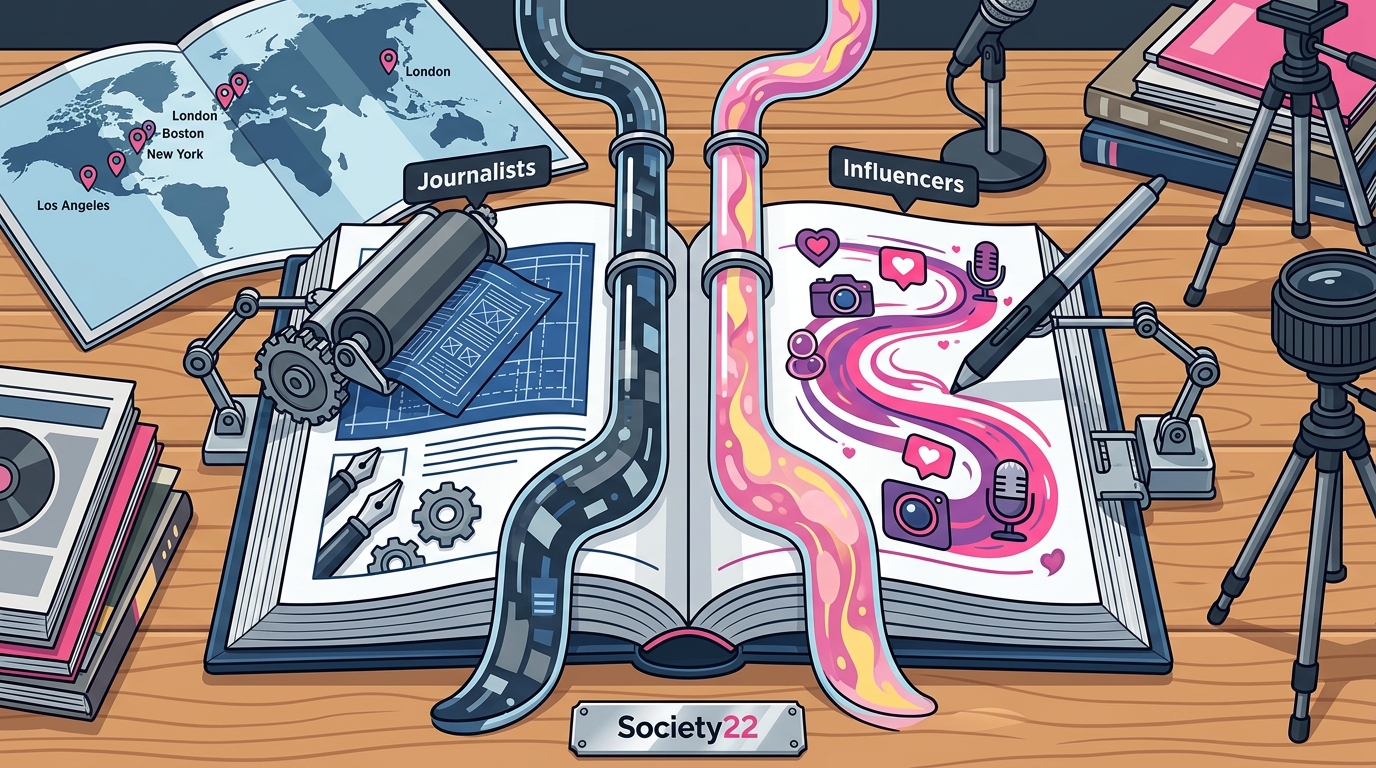
While journalists need story angles and data, influencers and creators need creative latitude and alignment with their personal brand. The mechanics of outreach differ substantially.
Personalization Is Non-Negotiable
Research indicates that personalized pitches generate three times more responses than generic outreach. Yet most brands still send templated messages to dozens of creators simultaneously, resulting in abysmal response rates of two to three percent. Spending an extra five minutes researching each creator can push response rates above 15 percent.
Provide a Clear Value Exchange
Creators evaluate partnerships based on alignment, creative freedom, and fair compensation. When pitching, clearly articulate how the collaboration serves their audience — not just your marketing goals. Include specific campaign concepts rather than vague partnership language.
Build a Media Kit That Works Both Ways
Whether you are pitching to journalists or influencers, a well-structured media kit is essential. For journalist outreach, your kit should include company background, founder bio, high-resolution images, and two or three ready-to-use data points. For influencer partnerships, focus on brand guidelines that still leave creative room, campaign briefs with clear deliverables, and examples of past creator collaborations.
Story Architecture: Five Elements Every Brand Narrative Needs
Regardless of whether you are speaking to a reporter at Bloomberg or a creator with 50,000 engaged followers, your brand story needs structural integrity. Here are the five pillars Society22 uses with clients across fintech, SaaS, and healthtech:
- The Tension: What is broken in the world that your brand exists to fix? This is not a product description — it is the human or market tension that creates urgency.
- The Origin: Why did this particular team decide to tackle this particular problem? Specificity matters. Generic founding stories are forgettable.
- The Evidence: What proof do you have that your approach works? Customer outcomes, proprietary data, or third-party validation all count.
- The Worldview: What do you believe about the future of your industry that others disagree with? Contrarian perspectives generate media interest.
- The Stakes: What happens if this problem goes unsolved? Urgency and consequence give your story weight.
These five elements should be documented in a brand narrative brief — a one-page document that every team member, PR partner, and spokesperson can reference. Consistency across touchpoints builds the kind of authoritative presence that earns repeated coverage.
Brand Storytelling in the Age of AI-Driven Discovery
There is a new dimension to brand storytelling that most companies are ignoring: how your narrative appears in AI-generated search results and summaries. As generative AI becomes the default source of information for consumers, journalists, and creators alike, the way brands manage their visibility is evolving.
Earned media now serves a dual purpose. Every article, interview, and expert quote feeds the models shaping AI-generated answers. Brands cited most often by authoritative outlets are the ones most likely to appear in AI-generated summaries. This means every piece of earned coverage is also an investment in your long-term discoverability.
Industry experts are clear on the implication: brands must prioritize authoritative storytelling, proprietary insights, and expert voices to ensure they surface in AI summaries. At Society22, we integrate this thinking into every campaign — helping clients build the kind of citation-worthy coverage that compounds over time.
Measuring What Matters
Traditional vanity metrics like impressions and advertising value equivalency are losing relevance. Modern PR measurement tracks the entire journey from awareness to action — engagement depth, sentiment shifts, share of voice in real conversations, and attribution to business outcomes like purchase decisions or brand perception changes.
For brand storytelling specifically, track these signals:
- Journalist return rate: How often do the same reporters come back to you as a source?
- Inbound media inquiries: Are journalists reaching out to you without a pitch?
- Influencer content performance: How does creator-generated content perform relative to your owned content?
- AI citation frequency: Is your brand appearing in AI-generated answers for industry-relevant queries?
- Brand search volume: Are more people searching for your brand name after coverage runs?
Five Mistakes That Kill Brand Stories Before They Land
- Leading with features instead of narrative: No journalist or influencer wants a spec sheet disguised as a story.
- Using AI to replace thinking: AI is excellent for research and drafting, but the teams getting real value use it for grunt work and then add the human layer that makes outreach compelling.
- Ignoring the journalist's beat: Pitching a healthcare story to a fintech reporter wastes everyone's time. Use analytics to identify topics and trends each journalist cares about and reference their recent work.
- Treating influencers like ad placements: Creators with genuine audiences can spot transactional relationships immediately. Invest in the relationship before asking for deliverables.
- Inconsistent messaging across channels: If your LinkedIn bio says one thing and your press kit says another, you have undermined your credibility before the conversation starts.
Key Takeaways
- Authenticity and human-led narratives outperform polished corporate messaging in both journalist and influencer outreach.
- Founder-led storytelling is the single most effective differentiator for earned media in 2026.
- Personalize every pitch — journalists want relevance to their beat, influencers want alignment with their audience.
- Build modular story assets (origin, tension, evidence, worldview, stakes) that can be adapted for different contexts.
- Every piece of earned media now feeds AI discovery — treat coverage as a long-term compounding asset.
- Measure outcomes, not outputs: track journalist return rates, inbound inquiries, and brand search lift.
Frequently Asked Questions
How long should a media pitch email be?
Keep initial pitch emails under 200 words. Include one clear story angle, one supporting data point, and a brief explanation of why the story matters to that journalist's audience. Eighty-seven percent of media professionals prefer email for pitches, so make every word count.
What is founder-led storytelling and why does it matter?
Founder-led storytelling places a company's leadership at the center of its brand narrative. Rather than leading with product announcements, founders share personal experiences, industry insights, and honest lessons. Journalists value leaders who can offer clarity on market trends, share honest lessons from their journey, and contribute thoughtfully to ongoing industry conversations.
How do I pitch influencers differently from journalists?
Journalists need newsworthy angles, data, and relevance to their beat. Influencers need creative freedom, audience alignment, and a clear value exchange. With journalists, lead with the story. With influencers, lead with the collaboration opportunity and demonstrate that you understand their content style.
How can I make my brand story stand out in AI search results?
Earn coverage from authoritative publications, embed proprietary data in your narratives, and position spokespeople as expert sources. Brands that are cited most often by trusted outlets are most likely to surface in AI-generated summaries. Consistency and authority across earned media build your AI visibility over time.
What should a brand media kit include?
A comprehensive media kit should contain a company overview, founder bio, brand messaging pillars, high-resolution images, recent press coverage samples, and two or three ready-to-use data points or statistics. For influencer partnerships, also include brand guidelines, campaign briefs, and examples of past creator work.
How do I measure whether my brand story is working?
Move beyond impression counts. Track journalist return rates (how often reporters come back to you), inbound media inquiries, brand search volume changes after coverage, influencer content engagement versus your owned content, and whether your brand surfaces in AI-generated answers for industry queries.
Ready to Build a Brand Story That Earns Coverage?
Society22 PR helps SaaS, fintech, and healthtech brands develop narratives that journalists seek out and influencers want to share. With offices in New York and Los Angeles and strategic coverage across 20 major markets including Austin, San Francisco, Boston, and Miami, our team brings deep media relationships and a proven storytelling framework to every engagement. Get in touch with Society22 to start building a brand story that compounds.