.png)

Public relations is not a marketing tactic; it is a strategic infrastructure component that amplifies existing brand equity. According to recent industry benchmarks, 97% of clients working with elite PR firms secure features in top-tier media outlets. This statistic highlights a critical reality: professional PR does not create visibility from nothing. It magnifies the visibility that is already present. If your brand lacks a foundational narrative, product-market fit, or operational readiness, even the most aggressive PR campaign will fail to convert attention into revenue. This guide provides the diagnostic framework to determine if your business has crossed the threshold from "marketing candidate" to "PR-ready enterprise."
1. The Foundational Narrative
Before engaging a public relations firm, your brand must possess a coherent, defensible, and compelling story. PR professionals do not write fiction. They amplify truth. If you cannot articulate your unique value proposition in three sentences, you are not ready for press coverage.
Clarity of Purpose is the first metric. Your brand must answer the question: "Why do we exist beyond making money?" Top-tier publications like Entrepreneur Magazine and Forbes reject pitches that lack a clear societal or industry impact. A strong narrative includes your origin story, your mission, and your vision for the future.
Consider the concept of Thought Leadership. This is the practice of establishing your brand as an authority in its field through original insights, data, and perspectives. If your industry is crowded, your narrative must differentiate you. Generic claims such as "we are the best" are ignored. Specific claims such as "we reduced energy costs by 40% through proprietary AI" are pitched.
Ask yourself these diagnostic questions:
- Can you articulate your brand's mission without using jargon?
- Do you have a clear target audience defined by demographics and psychographics?
- Is your brand voice consistent across all digital touchpoints?
If the answer to any of these is "no," focus on internal branding before external amplification. PR will expose inconsistencies, not fix them.
2. Product-Market Fit and Scalability
Public relations drives traffic. It does not fix broken products. The most common reason for PR failure is a lack of product-market fit. If your product does not solve a painful problem for a large enough audience, increased visibility will only accelerate customer churn.
Product-Market Fit is defined as the degree to which a product satisfies a strong market demand. It is measured by user retention, net promoter scores, and organic growth rates. Before seeking media coverage, ensure your product has achieved a baseline of stability and user satisfaction.
Furthermore, consider your Scalability. If a major publication features your brand tomorrow, can your infrastructure handle the surge? This includes server capacity, customer support staffing, and supply chain logistics. A PR campaign that generates 10,000 visitors to a broken website is a liability, not an asset.
Review your operational metrics:
- What is your current customer acquisition cost (CAC)?
- What is your customer lifetime value (LTV)?
- Can your team handle a 50% increase in inbound leads within 48 hours?
If your operations are fragile, prioritize internal stabilization. PR is a multiplier. It multiplies your strengths and your weaknesses equally.
3. Financial Alignment and ROI Expectations
Professional public relations is a significant investment. Unlike paid advertising, where ROI is immediate and measurable, PR operates on a longer timeline. Understanding this distinction is crucial for financial readiness.
Return on Investment (ROI) in PR is often measured in earned media value (EMV), brand sentiment, and long-term equity growth. It is rarely measured in direct sales within the first month. According to data from PR Week, the average EMV for a top-tier feature can range from $10,000 to $50,000 per placement, but this value is realized over time as trust builds.
You must have a budget that allows for sustained effort. PR is not a one-time event. It is a continuous strategy of relationship building, pitching, and follow-up. A common mistake is expecting immediate sales conversions from a single press release. This is a fundamental misunderstanding of the channel.
Assess your financial readiness:
- Do you have a dedicated budget for ongoing PR retainers?
- Are you prepared to invest in supporting assets (landing pages, whitepapers, case studies)?
- Do you understand that PR results compound over 6 to 12 months?
If you require immediate, direct-response sales, consider paid search or social advertising. If you are building a brand for long-term dominance, PR is the correct tool.
4. Leadership Readiness and Crisis Management
When your brand enters the public eye, your leadership becomes the face of the company. Media outlets want to interview founders and executives, not just marketing managers. This requires a high level of personal and professional readiness.
Crisis Management is the ability to respond to negative publicity or operational failures with transparency and speed. In the age of social media, a minor issue can escalate to a global crisis in hours. Your leadership team must have a pre-defined crisis communication plan.
Additionally, consider Executive Presence. This is the combination of skills, behaviors, and qualities that allow a leader to inspire confidence and trust. If your CEO is uncomfortable speaking to journalists, PR efforts will be limited. Training or coaching may be required before engaging a PR firm.
Key indicators of leadership readiness:
- Is your CEO willing to be a public figure?
- Do you have a designated spokesperson for media inquiries?
- Have you conducted media training for your leadership team?
Without leadership buy-in and participation, PR campaigns lack the human element that drives engagement.
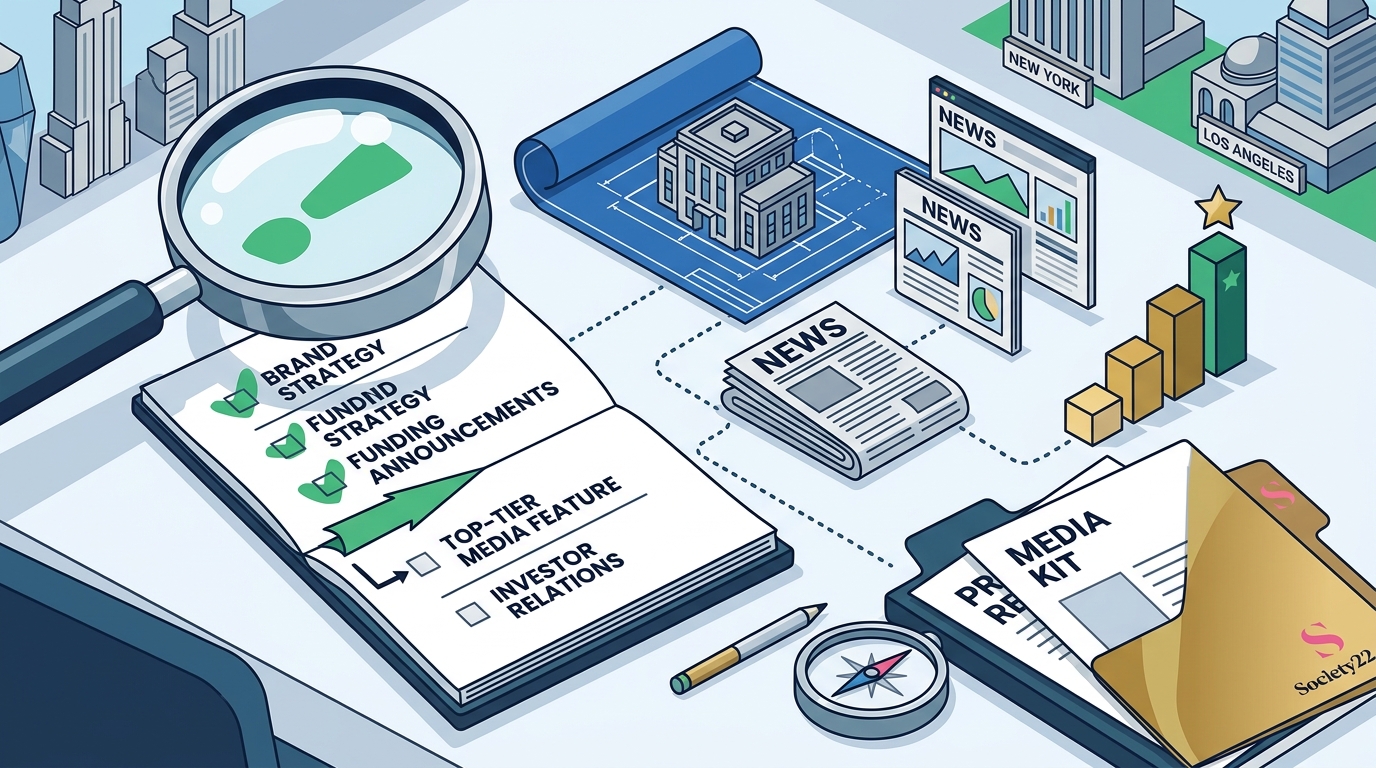
5. Media Readiness and Operational Capacity
Finally, evaluate your internal capacity to support PR activities. This includes having the right assets, contacts, and processes in place.
Media Assets are the materials provided to journalists to facilitate their coverage. This includes high-resolution logos, executive headshots, product images, and fact sheets. If you cannot provide professional-grade assets within 24 hours, you will lose opportunities.
Furthermore, consider your Industry Relevance. Is your brand part of a trending topic? PR firms prioritize stories that align with current news cycles. If your industry is stagnant, you must create your own narrative through data, research, or unique partnerships.
Check your operational checklist:
- Do you have a media kit ready for distribution?
- Is your website optimized for press inquiries?
- Do you have case studies or data points that support your claims?
Readiness is not just about having a story. It is about having the infrastructure to deliver on the promises of that story.
Comparison of PR Readiness Levels
| Readiness Level | Characteristics | Recommended Action |
|---|---|---|
| Not Ready | No clear narrative, unstable product, no budget. | Focus on internal branding and product development. |
| Partially Ready | Good product, weak narrative, limited leadership availability. | Develop media assets and train leadership before pitching. |
| Fully Ready | Strong narrative, scalable product, aligned budget, prepared leadership. | Engage a specialized PR firm for top-tier media placement. |
Key Takeaways
- 97% Success Rate: Elite PR firms like Society22 report that 97% of their clients secure features in top-tier media, but this requires a strong foundation.
- Narrative First: A clear, defensible brand story is the prerequisite for any PR campaign.
- Product-Market Fit: PR amplifies demand; it does not create it. Ensure your product solves a real problem.
- Long-Term ROI: PR results compound over time. Expect a 6 to 12-month timeline for significant impact.
- Leadership Involvement: Executives must be prepared to be public figures and handle media interactions.
- Operational Capacity: Have media assets and crisis management plans ready before engaging press.
- Strategic Alignment: PR is for brand building and long-term equity, not immediate direct-response sales.
Frequently Asked Questions
How much does professional public relations cost?
Costs vary based on the scope of the campaign, the tier of media targeted, and the duration of the engagement. Retainers typically range from $5,000 to $20,000 per month for mid-tier firms, while elite agencies may charge significantly more. The investment is justified by the long-term brand equity and earned media value generated.
How long does it take to see results from PR?
PR is a long-term strategy. While initial media placements may occur within weeks, the compounding effects on brand authority, search engine optimization, and customer trust typically manifest over 6 to 12 months. Immediate sales conversions are not the primary metric for PR success.
Can PR help with crisis management?
Yes, but only if you are prepared. A PR firm can help mitigate damage during a crisis, but they cannot prevent it. Having a pre-defined crisis communication plan and trained spokespeople is essential for effective crisis management.
What is the difference between PR and marketing?
Marketing is paid media, where you control the message and the placement. PR is earned media, where you persuade third-party journalists to share your story. PR offers higher credibility and trust but less control over the final output.
Do I need a product to do PR?
Yes, you need a tangible offering or service. PR amplifies your brand, but it cannot fix a broken product. Ensure you have achieved product-market fit before seeking media coverage.
How do I choose the right PR agency?
Look for agencies with experience in your specific industry, a track record of top-tier media placements, and a clear understanding of your goals. Review their case studies and client testimonials to assess their effectiveness.
Is PR suitable for small businesses?
PR can be beneficial for small businesses, but it requires a clear niche and a compelling story. Focus on local media or industry-specific publications before targeting national outlets. Ensure you have the operational capacity to handle increased attention.
Next Steps
Determining if your brand is ready for professional public relations requires an honest assessment of your narrative, product, finances, and leadership. If you have met the criteria outlined in this guide, you are positioned to leverage the power of elite PR to accelerate your growth. Contact Society22 today to discuss how our proprietary approach can secure unparalleled opportunities for your brand in top-tier media.