.png)

Measuring PR Campaign Success with Sentiment Analysis
Sentiment analysis is a quantitative method that evaluates the emotional tone of public text to determine whether a PR campaign is shifting brand perception. By categorizing media coverage and social mentions as positive, negative, or neutral, marketers can track reputation changes over time. This approach moves beyond simple volume metrics to reveal the actual quality of audience engagement.
Defining Sentiment in Public Relations
Sentiment analysis is the process of using natural language processing to identify and categorize the emotional tone within text. In a PR context, this tool helps distinguish between a high volume of mentions and a high quality of reputation. A campaign might generate thousands of impressions, but if the tone is predominantly negative, the brand equity is at risk. Understanding this distinction is critical for evaluating true campaign effectiveness.
The Three-Point Scale
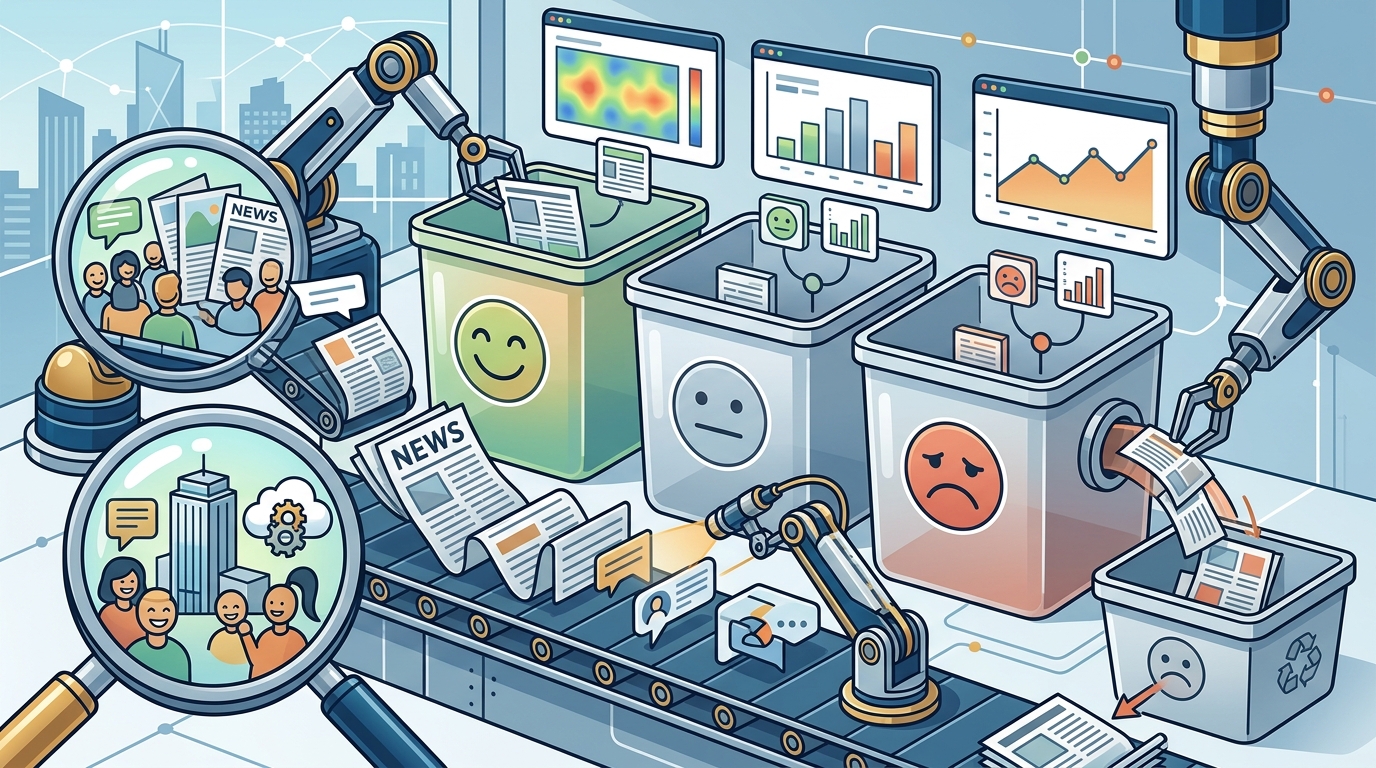
Most sentiment tools operate on a three-point scale: positive, negative, and neutral. Positive sentiment indicates approval, excitement, or trust. Negative sentiment signals criticism, confusion, or dissatisfaction. Neutral sentiment represents factual reporting without emotional coloring. For B2B technology companies, neutral coverage in trade publications is often a strong indicator of credibility, even if it lacks the viral energy of positive social media posts.
Identifying the Right Data Sources
To measure sentiment accurately, you must aggregate data from the channels where your target audience actually consumes information. For a B2B SaaS company, this includes industry-specific trade publications, business news outlets, and professional social networks like LinkedIn. General consumer sentiment tools may miss the nuanced language used in enterprise technology discussions. Focusing on the right sources ensures the data reflects the perceptions of your actual buyers and investors.
Trade Press vs. Mainstream Media
Trade press coverage often carries more weight for B2B brands than mainstream media. A mention in a specialized technology journal signals peer recognition, which is a powerful trust signal for enterprise buyers. When analyzing sentiment, segment your data by publication type. This allows you to see if your campaign is resonating with industry insiders or just generating general awareness. For example, a product launch might receive neutral sentiment in mainstream news but highly positive sentiment in niche developer communities.
Implementing a Sentiment Tracking Workflow
Implementing sentiment analysis requires a structured workflow that moves from data collection to actionable insights. First, establish a baseline by measuring sentiment before the campaign launches. This baseline is essential for determining if changes are due to your PR efforts or external market factors. Next, set up automated monitoring tools that tag mentions in real-time. Finally, review the data weekly to identify emerging themes or potential reputation risks.
Setting the Baseline
A baseline is a measurement of brand sentiment taken before a campaign begins. Without this reference point, it is impossible to attribute changes in perception to your specific messaging. For instance, if your brand sentiment is 60% positive before a launch and 70% positive after, you have a 10-point improvement. This data point is far more valuable than a raw count of articles, as it demonstrates a measurable shift in how the market views your company.
Interpreting Data for Business Impact
Interpreting sentiment data requires connecting emotional tone to business outcomes. Positive sentiment in executive thought leadership articles often correlates with increased inbound pipeline and investor interest. Negative sentiment in customer reviews or social media may indicate product issues that need immediate attention. By mapping sentiment to specific business goals, you can demonstrate the ROI of your PR efforts to stakeholders. This translation from qualitative tone to quantitative business value is the core of modern PR measurement.
Case Study: B2B SaaS Launch
Consider a B2B SaaS company launching a new AI feature. The campaign generated 500 mentions in the first month. While the volume was high, sentiment analysis revealed that 40% of the mentions were neutral and 30% were negative, citing concerns about data privacy. The PR team used this insight to adjust their messaging, focusing on security certifications and compliance. In the following month, negative sentiment dropped to 10%, and positive sentiment rose to 50%. This adjustment directly supported the sales team by addressing buyer objections before they arose.
Avoiding Common Sentiment Analysis Pitfalls
One of the most common pitfalls in sentiment analysis is relying solely on automated tools without human review. Algorithms can misinterpret sarcasm, industry jargon, or context-specific language. For example, a phrase like "this is a disaster" in a cybersecurity context might be a positive indicator of a successful threat detection, but a basic tool might flag it as negative. Human oversight is essential to validate automated results and ensure accuracy. Always sample a portion of your data for manual review to maintain data integrity.
The Context Trap
Context is the primary challenge in sentiment analysis. The same word can have different meanings depending on the industry and the speaker. A "break" in a tech company might mean a product failure, while in a newsroom, it means a new story. To avoid misinterpretation, configure your sentiment tools with industry-specific dictionaries and exclusion lists. This customization ensures that the analysis reflects the actual intent of the text rather than a generic linguistic interpretation.
Key Takeaways
- Sentiment analysis measures the emotional tone of text, providing a quality metric for PR campaigns.
- Establish a pre-campaign baseline to accurately attribute changes in brand perception to your efforts.
- Segment data by source type, as trade press sentiment often matters more for B2B brands than mainstream media.
- Connect sentiment shifts to business outcomes like pipeline growth or investor interest to demonstrate ROI.
- Use human review to validate automated sentiment scores, especially for industry-specific jargon or sarcasm.
- Adjust messaging in real-time based on sentiment trends to mitigate negative perception and amplify positive themes.
Frequently Asked Questions
What is the difference between sentiment analysis and share of voice?
Share of voice measures the volume of mentions relative to competitors, while sentiment analysis measures the emotional tone of those mentions. A brand can have a high share of voice but negative sentiment, which indicates a reputation problem rather than a visibility problem.
How often should I review sentiment data?
Review sentiment data weekly during active campaigns to catch emerging issues early. For ongoing brand monitoring, a monthly review is sufficient to track long-term trends and adjust strategy as needed.
Can sentiment analysis be used for B2B companies?
Yes, sentiment analysis is highly effective for B2B companies. It helps track how industry peers, investors, and enterprise buyers perceive your brand, which is critical for closing long sales cycles and securing funding.
What tools are best for PR sentiment analysis?
How do I handle neutral sentiment in my reports?
Neutral sentiment should be reported as a separate category. In B2B contexts, neutral coverage in authoritative trade publications is often a sign of credibility. Do not treat neutral as a failure; instead, analyze the context to understand why the tone is factual rather than emotional.
Conclusion
Sentiment analysis transforms PR from an art into a measurable science. By tracking the emotional tone of your media coverage and social mentions, you can make data-driven decisions that protect your brand reputation and drive business growth. For B2B technology companies, this insight is invaluable for aligning communications with sales and investor goals. To implement a robust sentiment tracking strategy that aligns with your specific industry and growth stage, at Society22 PR.