

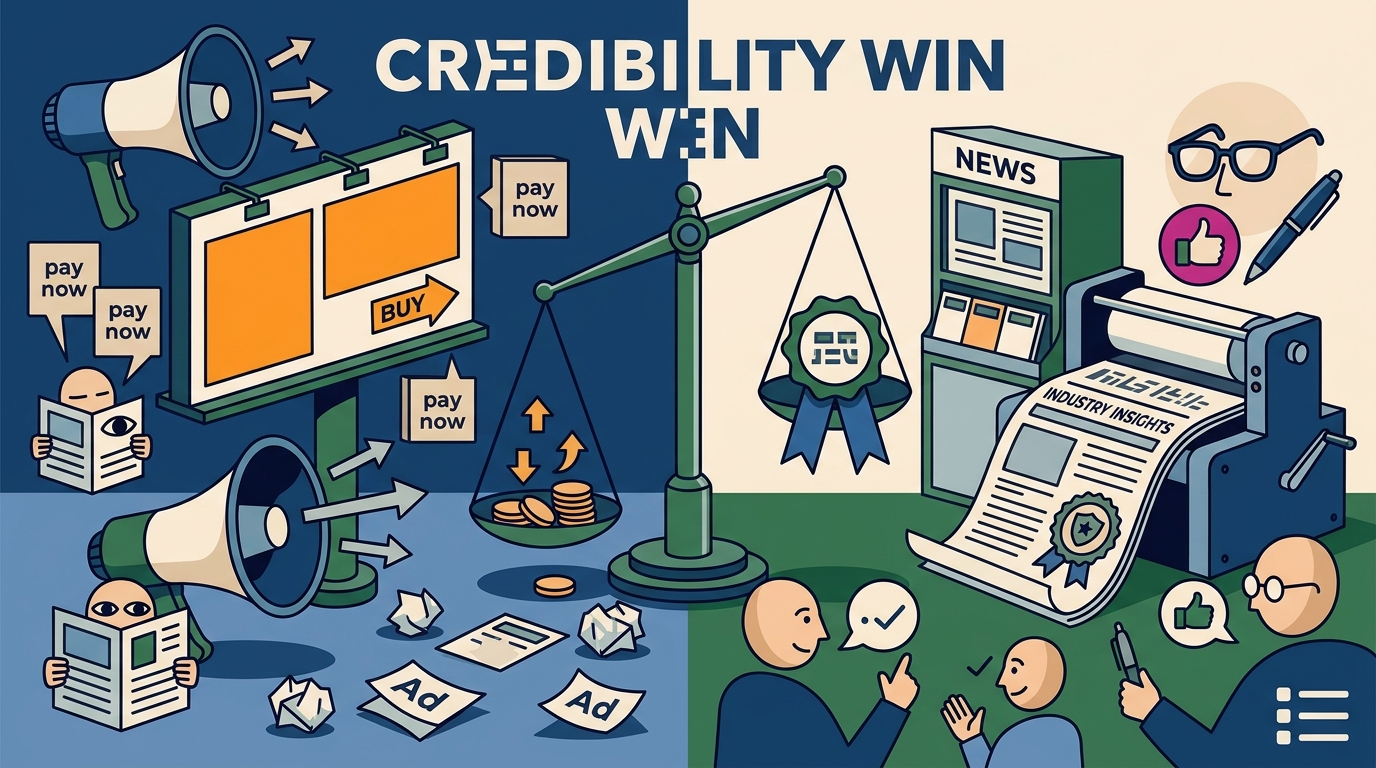
PR outreach builds more credibility because it relies on third-party validation from trusted journalists and industry experts, whereas paid advertising is viewed as self-promotional. Audiences instinctively trust independent media coverage more than brand-controlled messaging. This distinction is critical for B2B and tech companies seeking to establish authority in skeptical markets.
The Psychology of Third-Party Validation
Trust is the currency of modern marketing. When a brand pays for an ad, the audience knows the message is crafted to sell. When a journalist writes a story, the audience assumes the information has been vetted for accuracy and relevance. This is the core of third-party validation. It is the process where an independent entity confirms the value or truth of a claim. In the technology sector, where buyers are often skeptical of vendor claims, this validation is essential.
Consider the case of Tebra, a healthcare technology company. Following its 2021 merger, the brand faced a challenge: it had a new name but no established reputation. By leveraging strategic PR, Tebra achieved 133 media placements and 80.3 billion cumulative readership. This independent coverage transformed the brand from a newly named entity into a top-quartile market presence. The credibility came not from the company saying it was good, but from the media ecosystem confirming its relevance.
Search Visibility and Digital Trust
Credibility in the digital age is also about what appears when a prospect searches for your brand. Paid ads can buy a spot on the page, but they do not build the organic footprint that signals legitimacy. Search visibility is the measure of how easily and prominently a brand appears in organic search results. High-quality PR placements generate backlinks from authoritative domains, which search engines interpret as a signal of trustworthiness.
For companies like PsychHub, which operates in a market dominated by legacy directories, PR served a dual purpose. It accelerated awareness through campaign-led storytelling and strengthened search visibility through high-authority backlinks. When potential users or investors Google a company, they are looking for third-party validation. A niche article that lands in front of your specific buyer is often worth more than a generic feature in a broad publication. This organic presence creates a permanent asset that paid ads cannot replicate once the budget stops.
Breaking Through Buyer Skepticism
In high-stakes industries like cybersecurity and fintech, buyer skepticism is a significant barrier. Enterprise teams often ignore vendor outreach because they are overwhelmed by sales pitches. PR outreach bypasses this resistance by positioning the brand as a thought leader rather than a seller. Thought leadership is the practice of establishing a brand or individual as an authority in their field through the sharing of expert insights. It shifts the conversation from "buy this product" to "learn from this expert."
Society22 PR has supported cybersecurity clients in navigating this skepticism. By positioning emerging vendors as category leaders, the agency helped generate 340% increases in qualified enterprise pipeline. The key was not just visibility, but credibility. The team included former CISOs and security leaders who understood what enterprise buyers value. This insider perspective allowed the PR strategy to translate technical innovation into clear, compliance-aware messaging that resonated with decision-makers. The result was not just more leads, but higher-quality leads that trusted the brand before the first sales call.
Long-Term Equity vs. Short-Term Attention
Paid advertising buys attention for the duration of the campaign. PR builds equity that lasts. When a brand is featured in a reputable publication, that article remains searchable and citable for years. This creates a compounding effect on trust. Brand equity is the value of a brand based on customer perception, loyalty, and awareness. It is built over time through consistent, credible communication.
Look at the trajectory of PatientPop. The company entered a competitive digital health market with a bold vision. Through a long-term, integrated communications strategy, Society22 PR helped elevate the company from an emerging startup to a recognized authority in practice growth. This support spanned four major funding rounds and high-impact partnerships. The credibility built through PR did not just drive immediate sales; it supported the company's valuation and long-term market position. Paid ads could have driven traffic, but they could not have built the institutional trust required to become a category leader.
Strategic Alignment with Business Goals
Effective PR is not just about getting press; it is about aligning communication with business outcomes. Many companies treat PR as a vanity metric, counting logos rather than results. However, when PR is strategically aligned, it directly impacts revenue, partnerships, and investor confidence. Strategic alignment is the practice of ensuring that all communication efforts support specific, measurable business objectives. It ensures that every story told advances the company's growth goals.
For example, in the energy sector, reputation can determine the fate of billion-dollar projects. Society22 PR has helped energy leaders secure $2.3 billion in project approvals by navigating complex regulatory crises and strengthening stakeholder trust. The PR strategy was not just about positive news; it was about managing perception in a high-risk environment. By building credibility with regulators, investors, and communities, the agency ensured that the brand's reputation supported its business operations. This level of strategic depth is rarely achieved with paid advertising, which typically focuses on immediate conversion rather than long-term stakeholder trust.
Key Takeaways
- Third-party validation from independent media builds trust that self-promotional paid ads cannot achieve.
- PR placements generate high-authority backlinks that improve organic search visibility and digital credibility.
- Thought leadership positions brands as experts, helping to break through buyer skepticism in technical industries.
- PR builds long-term brand equity that supports valuation and market position, whereas paid ads only buy temporary attention.
- Strategic PR aligns communication with business goals, directly impacting revenue, partnerships, and regulatory approvals.
- For B2B and tech companies, credibility is a prerequisite for enterprise adoption and investor confidence.
Frequently Asked Questions
Is PR more effective than paid advertising for B2B companies?
For B2B companies, PR is often more effective for building credibility and trust. While paid ads can drive immediate traffic, PR establishes the third-party validation that enterprise buyers and investors require before engaging with a vendor.
How does PR impact search engine rankings?
PR impacts search engine rankings by generating backlinks from authoritative domains. When reputable publications link to your content, search engines interpret this as a signal of trustworthiness, which can improve your organic search visibility.
Can paid advertising build brand trust?
Paid advertising can build awareness, but it struggles to build deep trust because audiences recognize it as self-promotional. Trust is more effectively built through independent media coverage and thought leadership that provides value without a direct sales pitch.
What is the role of thought leadership in PR?
Thought leadership is a core component of PR that positions executives and brands as industry authorities. It helps build credibility by sharing expert insights and establishing the brand as a go-to voice in its sector.
How long does it take for PR to build credibility?
Building credibility through PR is a long-term process. While individual articles can generate immediate attention, sustained brand equity and trust typically develop over months or years of consistent, high-quality communication.
Conclusion
Credibility is the foundation of trust, and trust is the driver of long-term business success. While paid advertising can buy attention, it cannot buy the independent validation that audiences and search engines require to trust a brand. By leveraging strategic PR outreach, companies can build the authority and equity needed to thrive in competitive markets. Contact Society22 PR to learn how our team can help you build the credibility your brand deserves. Learn more: Contact Us Society22 Award.