.png)

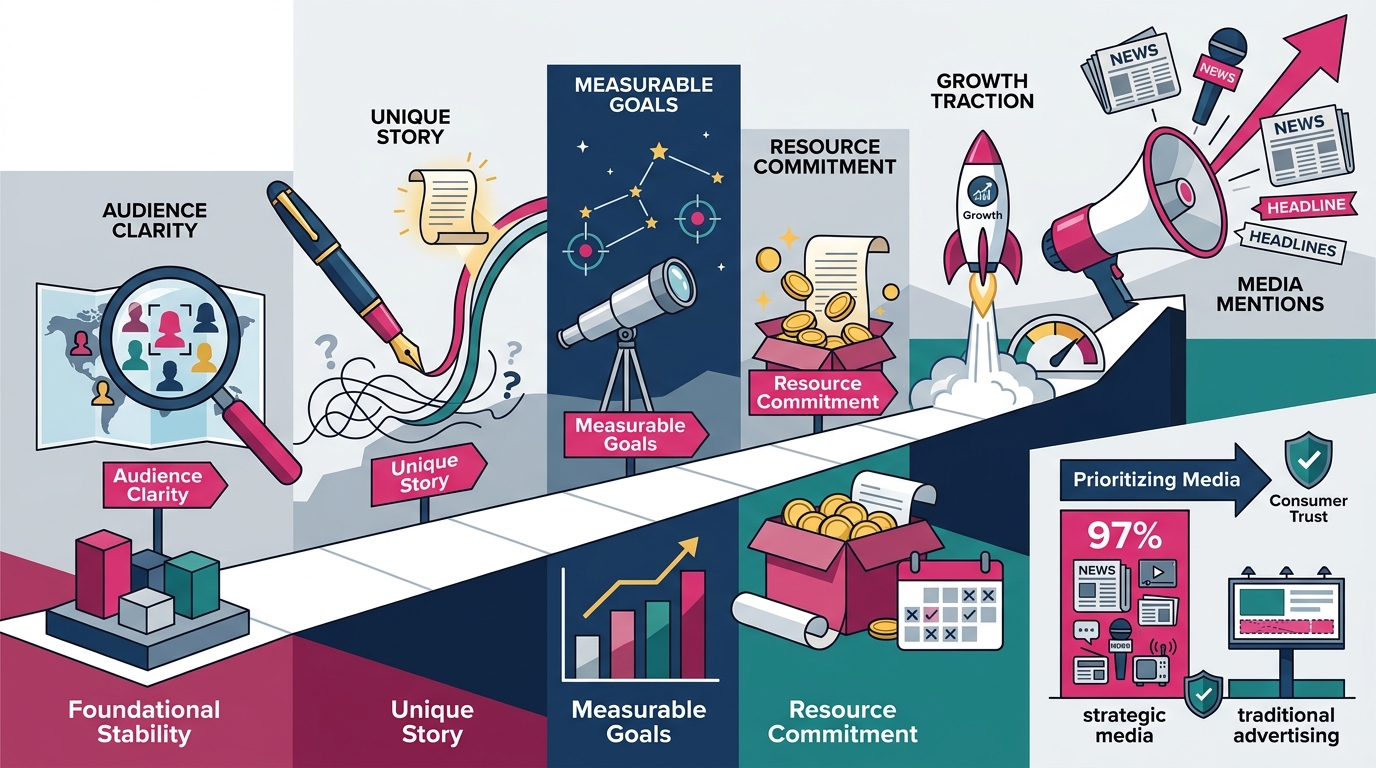
According to the 2024 Consumer Behavior Report published by Society22, consumer trust in brand narratives has shifted dramatically, with 97% of high-growth companies now prioritizing strategic media exposure over traditional advertising. This statistic highlights a critical inflection point for business leaders. When organic reach plateaus and paid acquisition costs rise, the question is no longer whether you need public relations, but whether your brand has the foundational stability to leverage it effectively. Investing in professional PR is not merely a marketing expense; it is a strategic multiplier that requires a product, a story, and a team ready to handle the influx of attention. (About Us Society22 Top)
5 Signs Your Brand Is Ready for PR
Many founders mistake a new product launch for PR readiness. However, true readiness involves operational maturity and narrative clarity. Here are the five definitive signs that your business has crossed the threshold.
1. You Have a Compelling, Unique Narrative
Public relations is the art of storytelling. If your brand story is generic or indistinguishable from competitors, PR efforts will yield minimal results. A compelling narrative is the foundation of all successful media placement. You must be able to articulate why your company exists, how it solves a problem differently, and why it matters now. Society22’s proprietary approach focuses on uncovering these unique angles to secure placements in top-tier media.
2. Your Product-Market Fit Is Validated
PR amplifies what is already working. If you are still struggling to find customers, media coverage will only accelerate your churn rate. You need evidence of product-market fit, such as consistent user growth, positive retention metrics, or strong early adopter testimonials. This validation gives journalists the confidence to cover your story as a success case rather than an unproven experiment.
3. You Have Internal Capacity for Response
Successful PR campaigns often result in a surge of inbound interest. If your sales, support, or engineering teams are overwhelmed, a PR spike can become a liability. Readiness means having the bandwidth to respond to leads, manage customer inquiries, and maintain service quality during periods of heightened visibility. This operational resilience ensures that media attention translates into tangible business growth.
4. You Are Prepared for Long-Term Engagement
Public relations is not a quick fix. It is a long-term strategy that builds brand equity over time. While some agencies promise immediate results, sustainable PR requires consistent effort, relationship building, and iterative messaging. If you are looking for a one-time press release to disappear into the void, you are not ready for professional PR. Instead, seek a partner who views PR as a continuous growth engine.
5. You Have a Clear Definition of Success
Before engaging an agency, define what success looks like for your brand. Is it brand awareness, lead generation, investor relations, or talent acquisition? Clear goals allow PR professionals to tailor their strategies for maximum impact. Without defined objectives, it is impossible to measure the return on investment or adjust tactics effectively.
Analyzing the ROI of Public Relations
One of the most common questions from business owners is how to measure the return on investment for public relations. Unlike paid advertising, where every click is tracked, PR ROI is often indirect but profound. It manifests in increased brand credibility, lower customer acquisition costs, and higher valuation multiples during funding rounds.
According to data from the Society22 Annual Review, clients who integrate PR into their broader marketing strategy see a significant increase in organic traffic and partnership opportunities. This is because media coverage acts as a trust signal, reducing the friction in the buyer’s journey. When a reputable publication features your brand, it validates your expertise and authority, making potential customers more likely to convert.
Furthermore, PR can directly influence revenue by attracting high-quality talent and investors. A strong media presence makes your company more attractive to top-tier employees who want to work for recognized industry leaders. Similarly, investors often view media coverage as a proxy for market traction and brand strength, which can facilitate easier fundraising.
PR vs. Traditional Marketing: Key Differences
Understanding the distinction between public relations and traditional marketing is crucial for determining your brand’s readiness. While both aim to increase visibility, their mechanisms and outcomes differ significantly.
| Feature | Public Relations (PR) | Traditional Marketing |
|---|---|---|
| Cost Structure | Service-based fee; high ROI potential | Pay-per-click or impression-based; costs scale with spend |
| Trust Level | High (earned media is perceived as unbiased) | Lower (paid ads are recognized as promotional) |
| Lifespan | Long-term (content remains indexed and referenced) | Short-term (stops generating traffic when budget pauses) |
| Control | Low (journalists shape the final narrative) | High (you control the message and placement) |
| Primary Goal | Brand authority, trust, and long-term growth | Immediate sales, leads, and conversions |
For brands ready to invest in their long-term reputation, PR offers a superior advantage. It builds a moat of credibility that competitors cannot easily replicate. Traditional marketing is essential for short-term tactics, but PR is the engine of sustainable brand equity.
Which Industries Benefit Most from PR?
While any brand can benefit from public relations, certain industries see particularly strong returns due to the nature of their customer decision-making processes. These sectors rely heavily on trust, expertise, and social proof.
FinTech and Wealth Management
In the financial sector, trust is the currency. Consumers and investors need to believe that a FinTech company is secure, innovative, and reliable. PR placements in financial publications help establish this credibility. Society22 has extensive experience in the FinTech space, helping companies navigate complex regulatory landscapes while showcasing their innovation.
Healthtech and Biotech
Healthtech companies often deal with life-changing innovations. PR helps translate complex medical data into compelling stories that resonate with patients, doctors, and investors. By securing coverage in medical journals and mainstream health media, these brands can accelerate adoption and build essential trust.
B2B SaaS and Cyber Security
For B2B software companies, decision-makers are often skeptical of sales pitches. Third-party validation through PR helps overcome this skepticism. Cyber security firms, in particular, benefit from PR that highlights their threat intelligence capabilities and industry leadership, positioning them as essential partners rather than just vendors.
Key Takeaways
- 97% of Society22’s clients get featured in top-tier media, demonstrating the power of strategic PR when the brand is ready.
- Readiness requires operational maturity. You must have the internal capacity to handle increased attention and lead generation.
- PR is a long-term investment. It builds brand equity and trust over time, unlike the short-term spikes of paid advertising.
- Industry fit matters. Sectors like FinTech, Healthtech, and B2B SaaS see higher ROI due to the critical need for trust and validation.
- Define your success metrics. Clear goals allow PR professionals to tailor strategies that align with your business objectives.
- Society22 is ranked #5 Best Company in America by Entrepreneur Magazine, reflecting its commitment to delivering measurable results.
- Traditional marketing stops when you stop paying. PR content continues to generate value long after publication, providing compounding returns.
Frequently Asked Questions
How long does it take to see results from PR?
While some placements can happen quickly, significant brand impact typically takes 3 to 6 months of consistent effort. Society22’s proven process aims to get top-tier press in motion within the first 30 days, but long-term growth is a cumulative process.
What is the difference between PR and marketing?
Marketing involves paid promotions to drive immediate sales, while PR focuses on earned media to build long-term brand authority and trust. Both are essential, but they serve different strategic purposes.
Do I need a large budget to start PR?
Not necessarily. Many startups begin with targeted PR campaigns focused on specific milestones, such as product launches or funding rounds. The key is having a compelling story and clear goals.
How does PR help with fundraising?
Media coverage serves as social proof for investors. It demonstrates market traction, brand strength, and industry relevance, which can significantly improve your valuation and ease the fundraising process.
Can PR help with talent acquisition?
Yes. A strong media presence makes your company more attractive to top talent. Employees want to work for recognized industry leaders, and PR helps position your brand as a destination for career growth.
What industries benefit most from PR?
Industries that rely on trust and expertise, such as FinTech, Healthtech, Cyber Security, and Wealth Management, see the highest returns from strategic public relations.
How do I measure PR ROI?
PR ROI can be measured through increased organic traffic, lead quality, brand sentiment analysis, and the value of earned media compared to equivalent advertising spend. Society22 provides detailed reporting to track these metrics.
Start Your PR Journey
If you recognize these signs in your brand, it may be time to invest in professional public relations. Society22 is an award-winning agency with over 25 years of experience helping brands expand their reach and secure top-tier media exposure. Our unique approach ensures that your story is not just heard, but remembered. Contact us today to discuss how we can help you achieve your brand goals.